
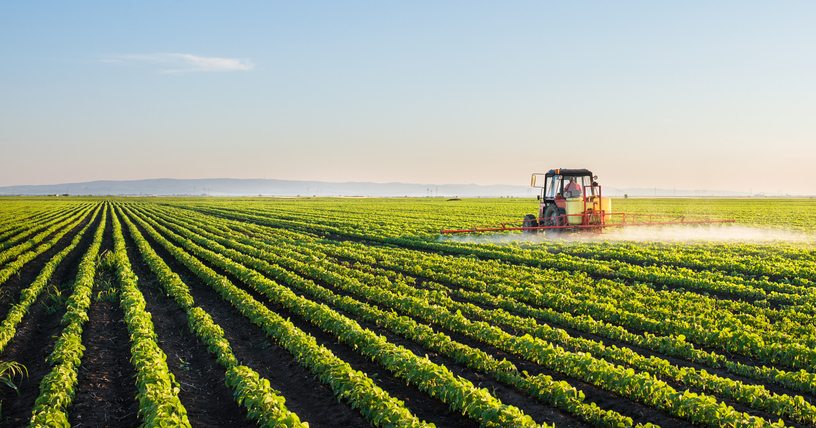
Agriculture is the science and art of growing plants in order to obtain crops. Agriculture was the most important development in the emergence of non-immigrant human civilization. The development of agriculture and breeding of domestic animals by humans increased the available food and the formation of cities and civilizations. Today, most agricultural products in the world are produced through concentrated or industrial agriculture, which is based on single-crop cultivation. However, the life of nearly 2 billion people still depend on subsistence agriculture.
Major agricultural products can be broadly classified into groups of food, fiber, fuel, and raw materials (such as natural rubber). Food classes include: grains, vegetables, fruits, oils, meat, milk, mushrooms, and eggs.
More than a third of the world’s workers work in the agricultural sector, although the number of agricultural workers in developed countries has decreased significantly over the centuries. Agricultural economy is very important for economic growth. In the 20th century, concentrated agriculture increased productivity. In this method of agriculture, the use of artificial fertilizers and pesticides is increased, and instead less labor is used. For thousands of years, farmers have relied on natural fertilizers to supplement or increase nutrients in the soil. Some farmers, especially those growing organic crops, still use natural fertilizers. In the early 1800s, scientists discovered which elements are essential for plant growth: nitrogen, phosphorus, and potassium. Currently, many farmers use chemical fertilizers containing nitrates and phosphates because these fertilizers greatly increase crop yields.
Animal husbandry is very important for the production of meat, milk, eggs, and wool, or using their power for work and movement. Some animals such as horses, mules, cows, buffaloes, camels, llamas, donkeys and dogs have been used for centuries to help cultivating , harvest crops, fight with other animals and transport agricultural products.